

17 November 2026
How Is Soap Made? What Happens To A Soap Bar Before It Reaches You.
Approximately two months. Here is the sequence.
Approximately two months. Here is the sequence.
This is how soap is made in our workshop in Tripoli, start to finish. Not a recipe. A description of what happened to the bar you are holding.
How is soap made?
Fat plus sodium hydroxide plus time. The oils react with the lye, the reaction is called saponification, and what comes out is soap and glycerin. In cold process, which is what we do, the glycerin stays in the bar. Everything else is detail, and the detail is below.
What are the main ingredients of soap?
Three: a fat, an alkali and water. For a bar, the alkali is sodium hydroxide. For liquid soap, it is potassium hydroxide. Everything else, the milk, the clay, the essential oils, is an addition.
What is cold process soap?
Soap made without cooking it. The reaction makes its own heat, and then the bar is left to cure. Hot process cooks the mixture to speed things up. Both are real soap. Cold process soap, explained goes into the difference.
Week 0: formulation
The recipe is calculated. Each oil has a saponification value. The formula is designed with a small superfat, slightly less lye than required for full saponification, leaving a margin and a small amount of unsaponified oil in the bar.
The superfat is a safety margin. Every oil needs a slightly different amount of lye to turn into soap. Use slightly less lye than the oils could take, and the lye is what runs out first.
Get the sums wrong in one direction and the bar is harsh. Get them wrong in the other and it is greasy. Nobody guesses. The numbers are worked out before anything is weighed.
Week 0: mixing
The oils are measured. Sodium hydroxide is dissolved in water. This generates significant heat and requires protective equipment. Both are brought to working temperature. Combined and mixed until trace: the point where the mixture thickens and holds a drizzle on its surface.
Trace matters because before it, the oils and the lye solution can still separate. After it, they have emulsified and can be poured. A stick blender gets there in minutes. A spoon gets there eventually, and your arm will have opinions about it.
Then the specific additions for each soap. Almond milk and liquid silk for the Almond Milk. Fresh carrot juice for the Carrot. Real fig puree for the Fig. Lavender herb, beeswax, and lavender oil for the Lavender. Cucumber extract and arnica for the Spearmint. Pink clay for the Cinnamon.
Week 0: moulding
Poured into moulds. Covered. Left 24 to 48 hours.
Saponification makes its own heat, so the covered mould stays warm while the reaction does most of its work in the first day or two.
Week 0 to 1: cutting
Unmoulded. Cut by hand. Edges uneven. Weight varies bar to bar above 120g minimum. Not a defect.
Weeks 1 to 8: curing
On racks in the workshop. Water evaporates. The bar hardens. If a rack gets forgotten in the dark the soap is probably better for it.
Two things happen on the rack. The last of the saponification finishes, and the water used to dissolve the lye leaves. The bar gets harder and milder, and lasts longer in use. Our soaps are mostly olive oil, which makes a slow-hardening bar, so six to eight weeks is what the formula needs, not a number we chose. Why soap cures for six to eight weeks has the full chemistry.
After curing: testing
Certified laboratory. Microbiological safety testing. Every batch. Required by law. Not shipped until the results are satisfactory.
The pH of our soap sits at 9 to 10, which is normal for real soap: soap is alkaline by nature. The laboratory certificate is on the Evidence page.
A batch that does not pass does not ship. That is the whole meaning of the sentence above, and it is the step most people never think about when they think about soap.
Stamping and wrapping
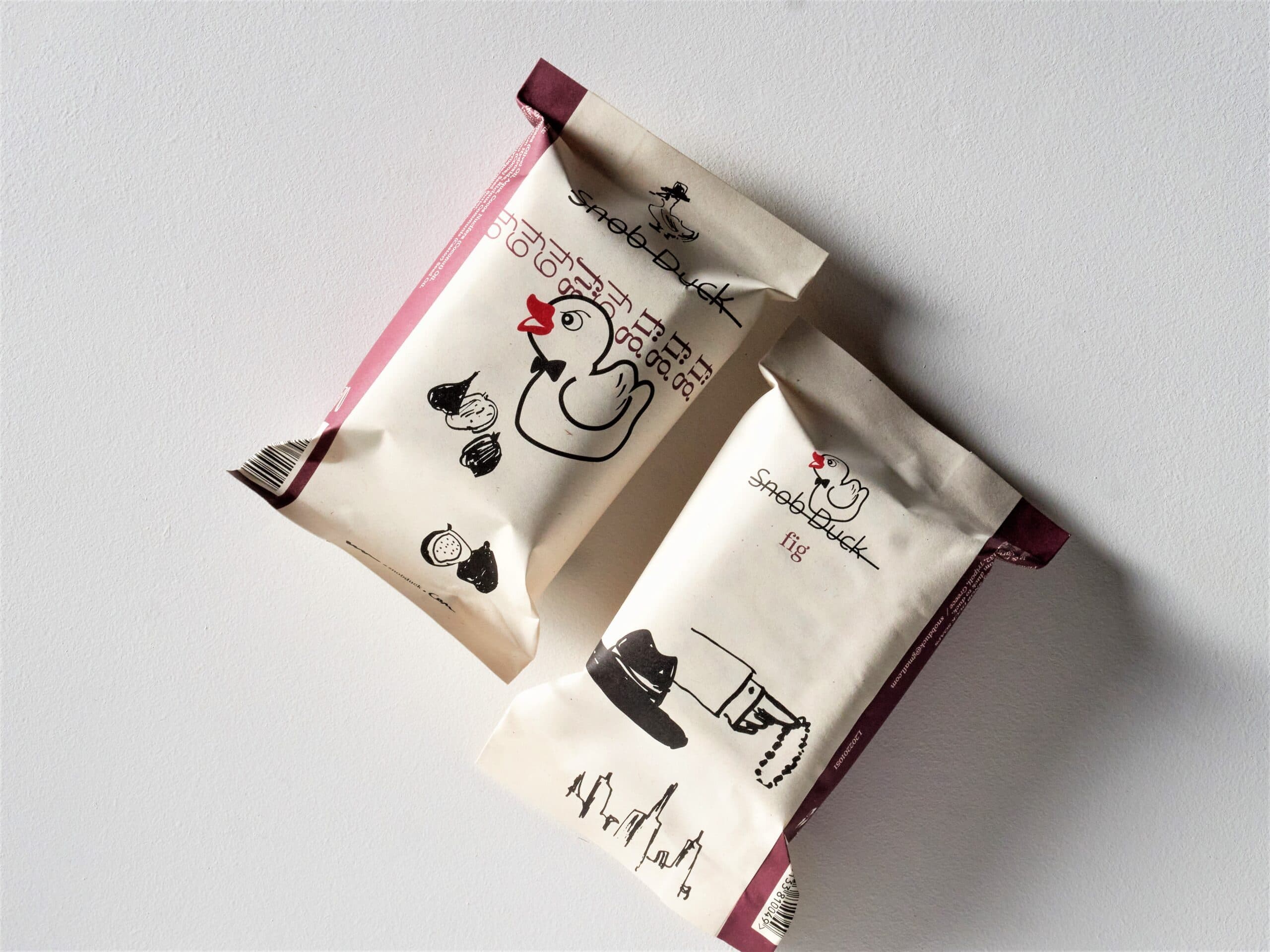
The duck stamp. Recycled paper wrapping. By hand.
Shipping
Whatever box we found. If the outer packaging looks repurposed it is because it is.
How long does it take to make handmade soap?
The making takes a day. The waiting takes the rest. From the moment the oils are weighed to the moment a bar is wrapped is about two months, and almost all of it is curing.
Cold process vs melt and pour
Melt and pour soap starts from a ready-made soap base, which is melted, coloured, scented and poured into a mould. No lye is handled, because someone else already did the saponification. It is quick. It is not what we do. Every bar of ours is made from oils and lye, from scratch.
A word on the lye
Sodium hydroxide is corrosive, and dissolving it in water releases a lot of heat. That is why the mixing step needs gloves and eye protection. By the time the bar has cured, the lye has reacted with the oils and become soap. That is the point of the whole process.
Can you make soap without lye?
No. Every real soap is made with lye. What you can do is buy a base someone else already made with lye, which is what melt and pour is. "Made without lye" on a soap label means either a detergent bar, or someone choosing their words carefully.
The whole thing, in one line
Weigh. Mix to trace. Add. Pour. Wait a day or two. Cut. Wait six to eight weeks. Test. Stamp. Wrap. Ship. Every bar on The Range has been through all of it, which is why a batch made today reaches nobody until it has cured.
Two months of work. One wash at a time.
There are photographs of the rest of it, if you want them.
The Workshop →