

17 November 2026
What "Handmade" Means On A Soap Label. Is Handmade Soap Regulated?
Nothing legally. That is a problem worth knowing about.
Nothing legally. That is a problem worth knowing about.
Handmade is not a regulated term in the EU. Any manufacturer can print it on any product. No certification. No definition. No standard.
Is handmade soap regulated?
The soap is. The word is not. Every bar of soap sold in the EU is a cosmetic product under Regulation (EC) No 1223/2009, whether it was made by a multinational or in a workshop with a drain in the floor. What the law does not do is define "handmade". The paperwork behind ours is on the Evidence page.
This does not mean handmade claims are always false. It means they are unverifiable without asking questions the label does not answer.
What does the law require of every soap maker in the EU?
A responsible person. A named person or company in the EU who answers for the product's safety and compliance. Their name and address have to be on the label.
A safety assessment. Before the soap can be sold, a qualified safety assessor has to assess it and sign a safety report.
A product information file. The safety report, a description of the product, how it is made and the proof behind any claim it makes, kept ready for the authorities to inspect.
A notification. The product has to be registered on the EU's Cosmetic Products Notification Portal before it goes on sale.
Good manufacturing practice. The law requires cosmetics to be made in line with it, in a workshop or a factory alike.
Claims that can be backed up. Under Regulation (EU) No 655/2013, anything a cosmetic says about itself has to be truthful and supported by evidence.
What you can actually verify
The INCI list. Regulated. Every ingredient listed by its INCI name, in descending order of weight down to 1%. Below 1%, ingredients may be listed in any order, so the end of the list tells you less than the beginning. A soap with Olea Europaea (Olive) Oil first contains more olive oil than anything else. A soap with Sodium Lauryl Sulphate first is a synthetic detergent bar regardless of what the front label claims.
If a real soap's list includes sodium hydroxide, that is not a warning. It is the honest version of the label, and what saponification actually means explains why none of it is left in the bar.
The responsible person. Every EU cosmetic must have one: legally named, responsible for safety and compliance. Ask who it is. If a brand cannot tell you, that is information.
The safety assessment. Required before any EU cosmetic is sold. It should exist. You can ask for it.
The batch number. Required on every cosmetic product for traceability.
How do you label soap legally?
In the EU, a soap label has to carry the name and address of the responsible person, the weight, a date of minimum durability if the product keeps for 30 months or less, any precautions for use, the batch number, the function if it is not obvious, and the full ingredient list. A soap missing these is not being sold legally, whatever it says on the front.
Can I legally sell homemade soap?
In the EU, yes, if you do everything above. There is no exemption for small makers or for soap made at home. The same regulation applies to one bar or a million, which is why so much of the cost of a small soap business is paperwork rather than oil. We wrote that part up as why handmade soap costs more.
Does handmade soap need FDA approval?
That is the American question, and the answer is no. The FDA does not approve cosmetics before they go on sale. In the US, a product that is true soap, made mostly of the alkali salts of fatty acids and sold only as soap, with no cosmetic or medical claims, is not regulated by the FDA at all. It falls under the Consumer Product Safety Commission. The moment a soap claims to moisturise, deodorise or treat anything, FDA rules apply.
Are handmade soaps safe to use?
A handmade soap sold legally in the EU has been through the same safety assessment as any other cosmetic. Handmade does not make it safer. It does not make it less safe. The paperwork is what makes it legal, and you are entitled to ask whether it exists.
What "handmade" does not tell you
The oils. The cure. Whether the bar is soap or detergent. Who checked it. It also does not mean natural, organic or gentle. Those are separate words and separate claims, and each one needs its own evidence.
How to tell a real handmade claim from a decorative one
Ask five questions. Who made it, and where? What is the first ingredient on the INCI list? Who is the responsible person? Has it had a safety assessment? Is there a batch number? A maker who actually makes things by hand answers all five without effort. If the answers are vague, so is the claim.
Why the word is still worth something
Because it is a question you can ask. A brand that says handmade is telling you there are hands. Ask whose. Ask where. Ask to see them. The ones who mean it will be pleased you asked, because it is the part of the job nobody photographs.
What we mean when we say handmade
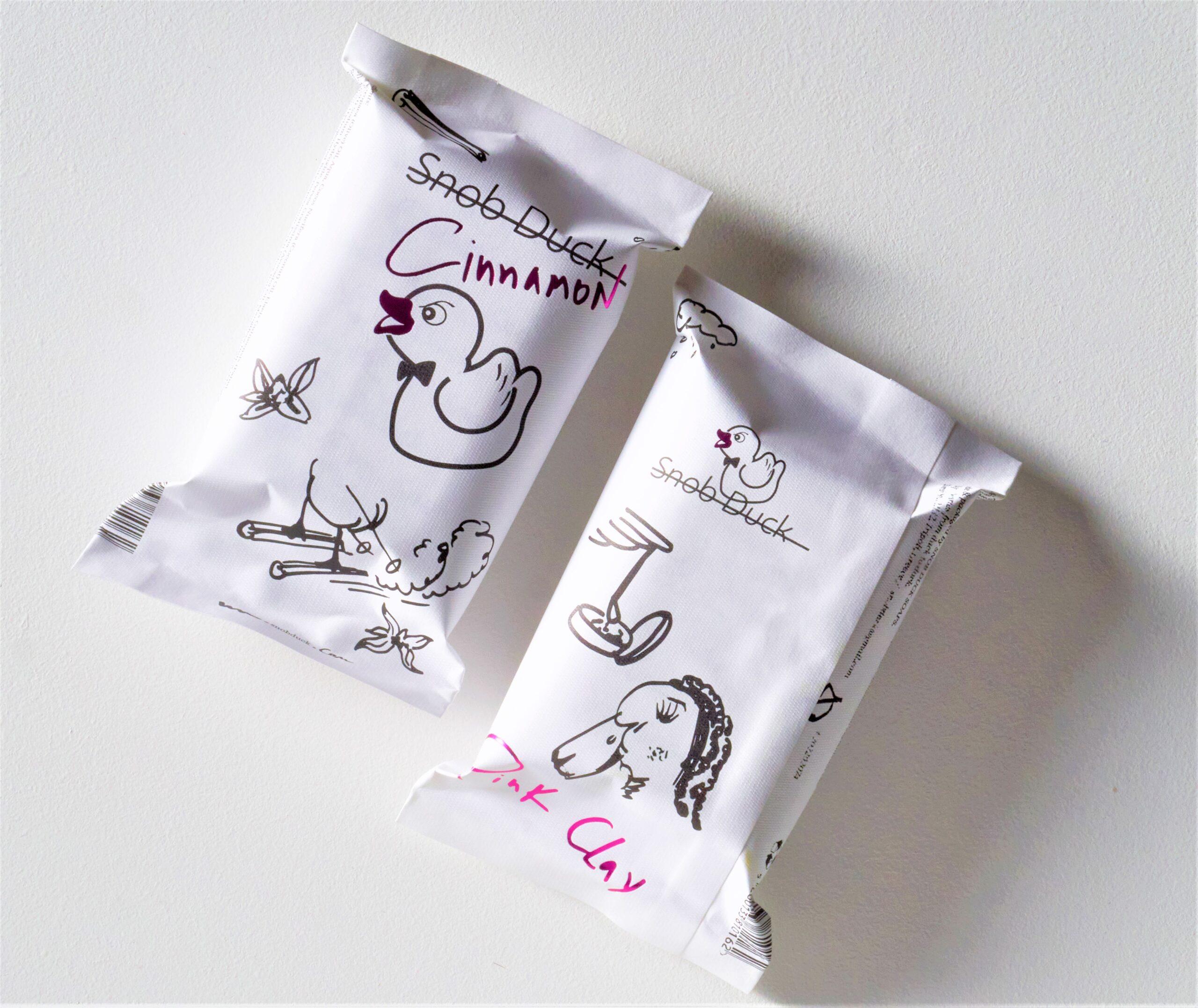
Mixed by hand. Poured by hand. Cut by hand. Stamped by hand. Wrapped by hand in recycled paper. Packed by hand into whatever box we found.
By hand, in our case, means the workshop in Tripoli, and the hands belong to people with names. Every bar on The Range went through them.
The handmade claim is true. We are explaining what it means specifically so you can apply the same questions to any brand that uses it.
The INCI, the pH and the laboratory certificate are on one page.
Evidence →